

A Cruise Traveler’s Guide to Port Accessibility
The distance between your ship and the first real moment of your day ashore can be far greater than it looks on a port map. A steep gangway, cobblestones outside the terminal, a tender boat, or a long walk to transportation can change what is comfortable and realistic. This guide to port accessibility helps you plan around those details before they become a disappointment at the pier.
For cruise guests who use a wheelchair, walk with a cane, manage fatigue, travel with young children, or simply prefer fewer physical obstacles, accessible shore time starts with honest planning. The goal is not to see everything. It is to create a private day that feels enjoyable, personal, and safely timed around your ship’s schedule.
What Port Accessibility Really Means
Port accessibility is more than whether a destination has ramps. It includes every part of the shore-excursion experience: getting off the ship, moving through the terminal, reaching your vehicle, entering attractions, using restrooms, and returning to the pier with enough time to spare.
Some ports are naturally easier than others. Purpose-built cruise terminals in places such as Barcelona, Miami, or Copenhagen may have level pathways, elevators, accessible restrooms, and nearby vehicle pickup. Historic destinations can be more complicated. In older Mediterranean towns, Caribbean villages, or European city centers, narrow sidewalks, uneven paving, steps, and limited curb cuts may be part of the setting.
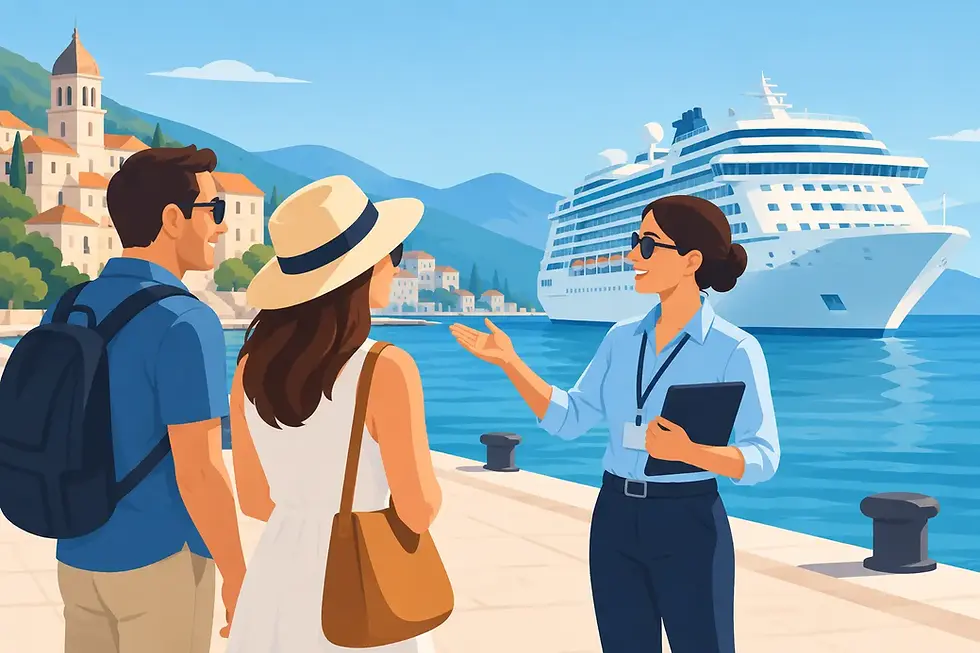
That does not mean those ports are off limits. It means the day should be designed around the traveler, not around a fixed sightseeing template. A knowledgeable local guide can select practical drop-off points, scenic routes with minimal walking, restaurants with accessible entrances, and attractions where the experience is worth the effort.
Start With the Ship-to-Shore Journey
Before choosing what to see, confirm how you will get ashore. Your ship may dock directly at a pier, but some itineraries use tender boats to carry guests from the ship to land. Tender operations can be affected by weather, sea conditions, tides, and the guest’s ability to transfer safely.
If a member of your party uses a mobility device, ask the cruise line about tender procedures well before sailing. Policies and practical conditions vary by ship and port. A manual wheelchair may be manageable in one situation but not another; a power chair can present different limitations. Do not assume that an accessible-looking destination guarantees an accessible tender day.
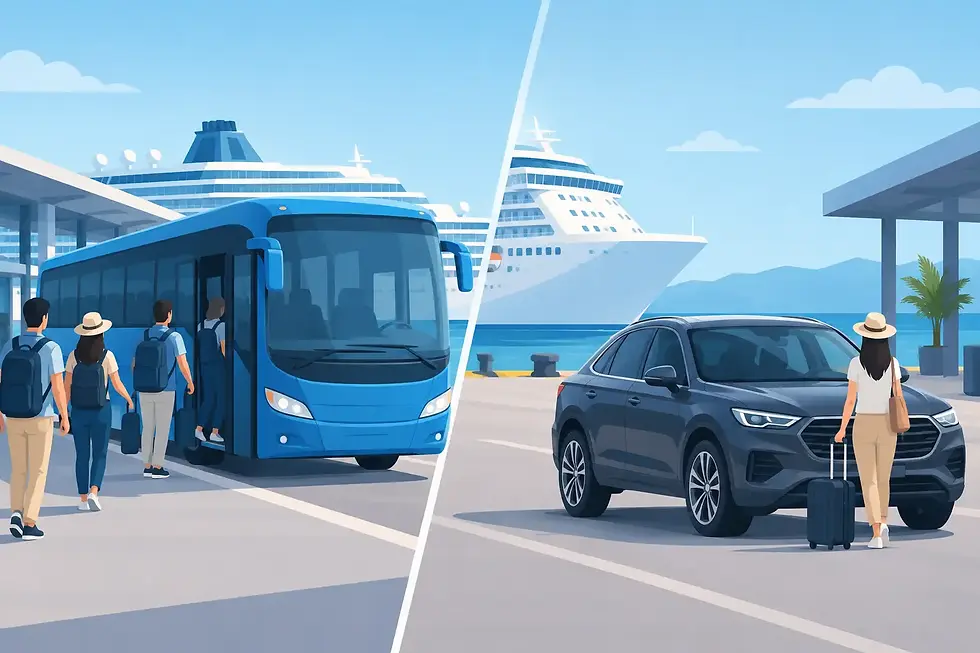
On a docked call, ask where private vehicles are permitted to meet guests. In some ports, cars and vans can collect travelers just outside the terminal. In others, security rules require a shuttle ride or a walk to a designated pickup zone. That detail matters when standing for long periods is difficult or when a group is managing walkers, folding wheelchairs, strollers, or medical equipment.
Choose Transportation That Fits Your Group
Transportation is often the deciding factor in whether a shore day feels freeing or exhausting. Standard vans may have a high step, narrow doorway, limited luggage room, or insufficient space for a mobility device. An accessible vehicle may offer a lift or ramp, secure wheelchair tie-downs, wider entry, and seating designed for a companion to remain nearby.
Still, “accessible vehicle” is not a universal description. Confirm the dimensions and weight of the wheelchair or scooter, whether the guest will remain seated during transport, and how many companions can travel in the same vehicle. If a traveler can transfer into a standard seat, a folding wheelchair and a lower-step vehicle may offer more options. If they cannot transfer, a properly equipped vehicle is essential.
For multigenerational families, comfort is broader than wheelchair access. A private vehicle can help grandparents avoid a large-coach schedule, give children a place to rest between stops, and allow the group to adjust the pace without delaying strangers. Privacy is especially valuable when one traveler’s needs require more frequent breaks.
Ask Better Questions Before You Book
Clear information leads to better choices. Rather than asking only whether a tour is accessible, explain what your group needs and request specifics. The right local partner will welcome the conversation and avoid making promises that cannot be supported by the destination’s conditions.
Consider asking these questions before finalizing a private shore experience:
Is the route suitable for a wheelchair, walker, cane, stroller, or traveler with limited stamina?
How many steps, hills, cobblestones, or uneven surfaces are expected at each stop?
Can the vehicle meet us near the ship, and how far is the walk from the terminal?
Are accessible restrooms available during the tour, and how often can we stop?
Can the itinerary be adapted if weather, crowds, fatigue, or port conditions change?
It is also helpful to share what has worked well on past trips. “Short walks with regular seating” is more useful than “moderate mobility.” So is explaining whether a guest can climb two or three steps with assistance, needs an arm for balance, has sensitivity to crowds or noise, or needs to remain close to a restroom. These details allow a guide to prepare thoughtfully.
Build an Itinerary Around Comfort, Not Speed
A private itinerary has one major advantage: it can be shaped around your energy, interests, and priorities. Instead of a seven-stop rush through a city, you might choose a panoramic drive, a waterfront lunch, one meaningful museum, and a relaxed neighborhood walk. You will often remember that day more fondly than a schedule built around checking boxes.
In destinations with steep terrain, a guide may arrange viewpoints that require little walking. In historic centers, you may spend more time at an accessible market, garden, café, or museum and less time navigating difficult streets. If a landmark has stairs at its main entrance, there may be an alternate entrance, elevator, or equally rewarding exterior view. It depends on the site, and advance confirmation matters.
Plan for breathing room between activities. Crowds, traffic, heat, and restroom breaks can take longer than expected, particularly in a group. A realistic itinerary protects the pleasure of the day and supports a timely return to the ship. It also gives you room to say yes to a local recommendation without worrying that one extra stop will derail the plan.
Accessibility Includes Invisible Needs
Not every access need is visible. Some guests are managing chronic pain, low vision, hearing loss, sensory sensitivity, anxiety, autism, dietary requirements, or conditions that make heat and long waits difficult. A caring guide does not need a medical history, but they do need enough information to create the right environment.
For low-vision travelers, ask about tactile or descriptive experiences, clear verbal orientation, and assistance on uneven ground. For guests who are deaf or hard of hearing, quieter locations, face-to-face communication, written details, or a guide comfortable adapting their style can make a meaningful difference. Travelers who find crowds overwhelming may prefer an early start, quieter neighborhoods, private museum arrangements where available, or time outside the busiest attractions.
Families should also consider how accessibility affects everyone in the group. A route that works for one person but leaves another overheated, overtired, or separated from the family is not truly well planned. The best days allow each traveler to feel included, not accommodated as an afterthought.
Protect Your Return-to-Ship Plan
Independence ashore should never mean uncertainty about getting back. Build the itinerary backward from the ship’s all-aboard time, not forward from the wish list. Your guide should know the required return time, the port location, and the practical travel time from your final stop to the pier.
Allow a buffer for traffic, weather, road closures, elevator outages, and the slower pace that can come with mobility needs. In tender ports, leave even more room, since you must return to the tender landing and complete the journey back to the ship. Keep your ship card, identification, essential medication, mobility-device charger if needed, and local contact details with you rather than in a vehicle or checked bag.
ShoreToursGuides helps travelers plan private experiences with cruise timing in mind, pairing local insight with the care and accountability cruise guests need. But wherever you book, the standard should be the same: candid answers, a realistic route, suitable transportation, and a return plan that does not rely on luck.
A More Personal Way to See the World
Accessible shore exploration is not about accepting less from a destination. It is about choosing the version of the destination that lets you be present for it. A private guide can slow the pace, change the route, find the right place to pause, and bring local stories to life without asking your group to keep up with a crowded bus.
When you share your needs early and choose experiences built around them, the port becomes more than a logistical challenge. It becomes your day: comfortable, meaningful, and ready to enjoy at your own pace.

Comments